This week I have been mulling over what happens to project management when the project-management system starts doing some of the project management. For years, software (Microsoft Project or Oracle Primavera anyone) has helped project managers record plans, assign work, track progress and prepare reports. The system held the information, but the project manager still had to gather it, interpret it and decide what to do next (even when Project Server generated status reports there was still some fine-tuning required).
Things are starting to change (in common with other areas we’ve looked at so far). Generative AI can already turn meeting notes into actions, summarize project activity, draft status reports and help identify risks. The more interesting development is the arrival of agents that can monitor project information continuously, spot emerging issues and initiate parts of the response. This does not remove the need for project management, it changes where the project manager adds value - and to be quite frank, I’ve always preferred project managers being out there talking to stakeholders, actively managing risks, the project teams and the tasks (as opposed to administering the project).
What is it?
The first wave of AI in project management has mostly been assistive. A project manager can use a general-purpose AI tool to draft a charter, summarize a meeting, improve a stakeholder communication or identify possible risks. These are useful capabilities, but they sit outside the core project-management process - the person selects the information, asks the question and decides what to do with the answer.
AI now seems to be moving inside the project-management platforms themselves. The deep research results this article is based on examined Jira, ServiceNow Strategic Portfolio Management, ClickUp, monday.com and Smartsheet. Across these products, generative AI is becoming a standard platform capability rather than a separate experiment. Common functions include natural-language searches, generation of tasks and user stories, meeting and status summaries, workspace creation and automated analysis of project information.
The marketplace appears to be developing through several overlapping stages.
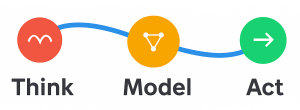
- Generate: The system drafts something - a project update, risk description, user story, meeting summary or communication.
- Interpret: It examines project information and identifies patterns, dependencies, missing information or possible issues.
- Recommend: It proposes a response, such as changing a priority, escalating a risk or adjusting a schedule.
- Act: It updates the project system, creates work, assigns an owner or sends a notification.
- Coordinate: Multiple agents or systems exchange information and complete different parts of a broader workflow.
Most project-management products are already reasonably capable at the first two stages. Recommendation is developing quickly, acting autonomously seems to be available in narrower and more controlled situations (although as we all know, getting under the skin of what we read about often reveals a different picture). Cross-platform coordination between agents is still emerging - it’s not mature.
This matters because generating a report is not the same as managing a project. A status report describes what the system can see. Project management involves deciding whether the information is reliable, understanding its organisational context and determining what response is appropriate. A delay may be a scheduling problem, a resource problem, a vendor problem, a governance problem or simply an indication that the plan was unrealistic. AI may help identify the signal, but that does not automatically give it the context or authority to resolve the issue.
Also worth clarifying is, while it seems obvious, there is also a difference between AI in project management and project management of AI. The first concerns using AI to plan and deliver a project. The second concerns managing AI initiatives themselves, where data quality, model behaviour, evaluation, governance and ongoing monitoring become part of the delivery lifecycle. Quite different things, but I suspect project managers in IT departments will increasingly encounter both.
PMI now describes the profession in similar terms: project professionals will use AI to manage work more effectively while also taking a lead in managing AI-driven initiatives. PMI has expanded its guidance, training and certification in this area and published a standard specifically addressing AI in portfolio, program and project management - see: The Standard for Artificial Intelligence in Portfolio, Program and Project Management from the Project Management Institute.
What does it mean from a business perspective?
A number of opportunities present themselves, along with caution that’s required.
- The immediate opportunity is a reduction in administrative effort - as is most of the GenAI implementations we see in early stage deployments. There is no doubt that that project managers, or project admin/support staff, spend a considerable amount of time collecting updates, reviewing notes, maintaining plans, preparing reports and chasing information. AI can assist with much of that work - meeting transcripts can become draft decisions and actions. Updates from several teams can become a first version of a status report. Risks mentioned across emails, tickets and meeting notes can be brought together for review. A portfolio tool can highlight projects whose milestones, dependencies or resources appear to be moving outside agreed tolerances.
- Project administration will not disappear. Instead of manually producing every report, they may review an AI-generated version and focus on what the underlying information actually means. The work becomes less about moving information between systems and more about testing the quality of the information and deciding where attention is required.
- These can be very positive changes. Many experienced project managers did not enter the profession because they enjoy reformatting status updates. However, administrative work often performs another function: it forces the project manager to engage with the detail. A project manager who personally speaks with workstream leads may notice hesitation, disagreement or organisational tension that is not visible in a structured update. If AI quietly gathers status and produces a polished report, the reporting process may become more efficient while the project manager becomes less connected to the project (although I’d argue that automating the processes as much as possible gives project managers more time to understand the potential issues inside a project - i.e. is it a watermelon project?). The challenge is therefore not simply to automate administration. It is to decide which administrative activities are really just handling of information and which are important mechanisms for understanding the work.
- The closer AI gets to changing a baseline or making a commitment, the stronger the controls need to become. Human review must therefore be designed into the process rather than included as a reassuring sentence in a governance document. Who receives the recommendation? What information do they see? Are they able to understand why it was made? Can they reject or amend it? Is the decision recorded? What happens when nobody responds?
- Reduced effort is not necessarily reduced project duration. Faster reporting does not automatically lead to faster decisions. Identifying more risks does not necessarily improve outcomes if nobody responds to them. Organisations should be clear about whether they are trying to (which require different measures): reduce project-administration effort; shorten decision cycles; improve forecast quality; identify risks earlier; improve consistency across projects; increase the number of projects a PMO can oversee; or give project managers more time for stakeholders, decisions and delivery problems.
- There is also a potential change in the relationship between the PMO and individual project managers. A PMO may be able to use AI to examine information across the portfolio continuously, identify recurring dependencies and challenge inconsistent reporting. That can improve organisational visibility, but it can also create tension if centrally generated interpretations begin to compete with the judgement of the project manager closest to the work. The answer is not to choose one or the other. Portfolio-level pattern recognition and project-level context are complementary. The operating model must make clear how they are brought together and who has authority to make the final call.
What do I do with it?
The practical starting point is not to try to create an autonomous project manager. Start with the areas where the work is repetitive, the value is understandable and a person can readily assess the output.
- Map the administrative workload. Identify where project managers spend time collecting, reformatting, reconciling and communicating information. Meeting follow-up, status consolidation, RAID-log maintenance and report preparation are often reasonable starting points.
- Separate information handling from professional engagement. Automate the copying and formatting where possible, but be careful about removing the conversations through which project managers understand stakeholder confidence, team dynamics and emerging concerns.
- Distinguish assistance from action. Document what the AI may draft, what it may recommend and what it may change. A system that summarizes a risk register requires different controls from one that creates risks, changes ratings or moves delivery dates.
- Keep accountable decisions with identifiable people. AI may support a recommendation, but the accountable owner should remain clear - particularly for changes to scope, funding, schedule baselines, risk acceptance and stakeholder commitments.
- Review the data before judging the intelligence. AI cannot produce a reliable portfolio view from inconsistent project definitions, stale schedules and poorly maintained dependencies. Improving project information may create more value than adding another AI feature.
- Measure project outcomes rather than AI activity. The number of reports generated or prompts submitted says little about value. Measure whether reporting effort decreased, decisions happened sooner, forecasts became more accurate, risks were identified earlier or project managers gained more time for delivery work.
- Involve the surrounding IT functions early. Once an assistant connects to project data or an agent is allowed to update the system, the implementation involves identity, access, logging, security, privacy, vendor management and support. It is no longer simply a productivity feature.
- Build capability in the PMO rather than relying entirely on vendors. Project managers do not need to become machine-learning engineers, but they do need enough AI literacy to question outputs, understand limitations and design appropriate human oversight. PMI’s guidance increasingly emphasizes technical fluency, data awareness, ethical foresight and the ability to operationalize AI responsibly.
The deeper change is not that AI will become the project manager. It is that parts of the project-management process will increasingly be performed continuously by systems rather than periodically by people. That shifts the project manager’s role toward judgement, challenge, communication, intervention and orchestration.